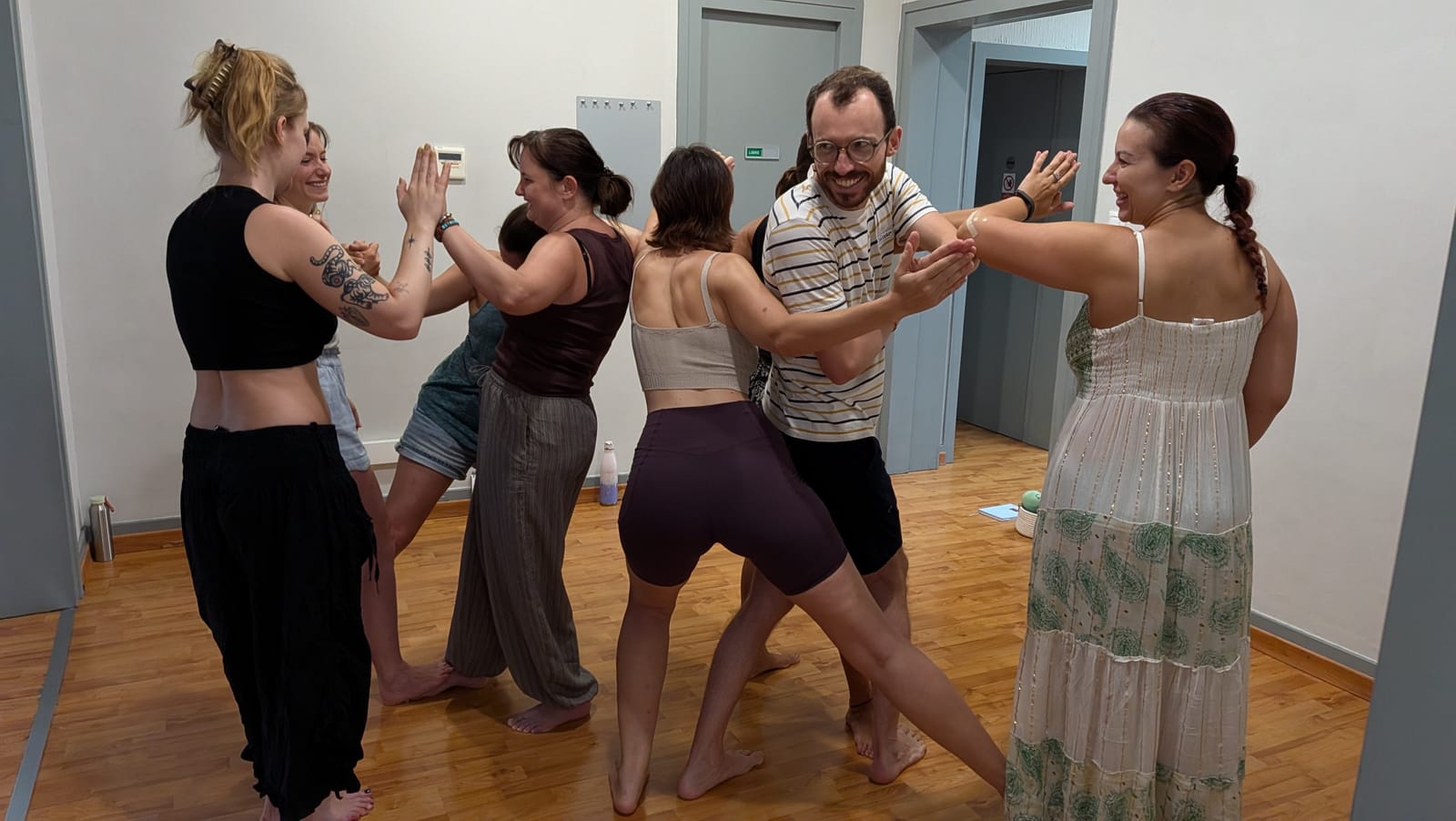



PODCAST
Curious how I think about facilitation?
Listen to my conversation on the Life on Fifth podcast about facilitation and self-expression.
LEARN
For educators, facilitators, therapists, leaders and people who work with groups.
Gain the confidence, skills and drama-based methods to lead groups where everyone takes part.
Whether you are teaching, facilitating, leading a team or working in a community setting, these trainings help you develop the skills to hold space, design meaningful experiences and respond to the people in front of you.
From €250 for an online training · What shapes the price
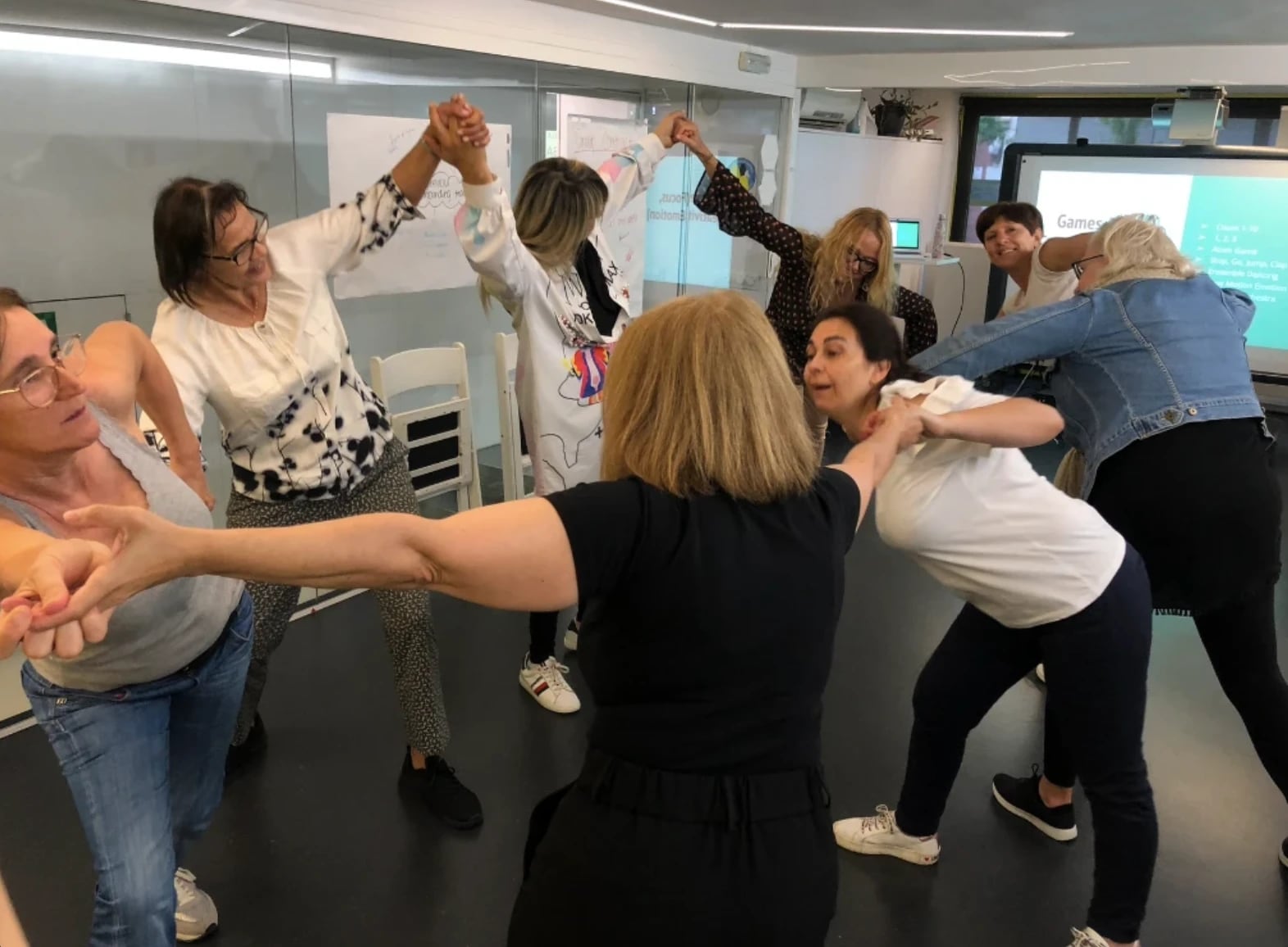
TWO WAYS TO LEARN
Every training is tailored to your group. Choose one focus, or combine both.
Facilitation Foundations
THE PROBLEM
The same voices dominate, quieter people hold back, and decisions end up resting on you. You want people to take part and take ownership, but it's hard to share the space without losing direction.
THE OUTCOME
You lead with clarity and care: people participate, contribute and own the outcome, and you no longer have to carry the room alone.
What we work on
Methods may include: Facilitation fundamentals, participatory decision-making, structured dialogue, practice rounds with feedback and reflection.
Tell me about your groupNext in-person training · Barcelona, March 2027
I'm running an in-person drama training for facilitators in Barcelona in March 2027. Join the waitlist to be the first to hear the dates and details, and to get early-bird pricing before registration opens. No acting needed.
DRAMA TECHNIQUES
A few of the techniques you can explore: participatory, embodied and dynamic. No acting skills needed, for you or your group.
Small groups use their bodies to create a still image, like a photo, of a moment, an idea or a situation.
Why it's useful: It makes abstract ideas visible in seconds, and everyone takes part without needing to speak first.
Read more about Freeze Frame (opens in a new tab, Drama Resource)While a freeze frame is held, you tap someone on the shoulder and they say what their character is thinking or feeling.
Why it's useful: It reveals what's unsaid in a situation and builds empathy by giving voice to different perspectives.
Read more about Thought Tracking (opens in a new tab, Drama Resource)A short scene shows a real problem. The audience can stop it, step in and try a different way to respond.
Why it's useful: People rehearse difficult conversations and test real alternatives, so change feels possible, not just discussed.
Read more about Forum Theatre (opens in a new tab, Mandala Center for Change, Theatre of the Oppressed)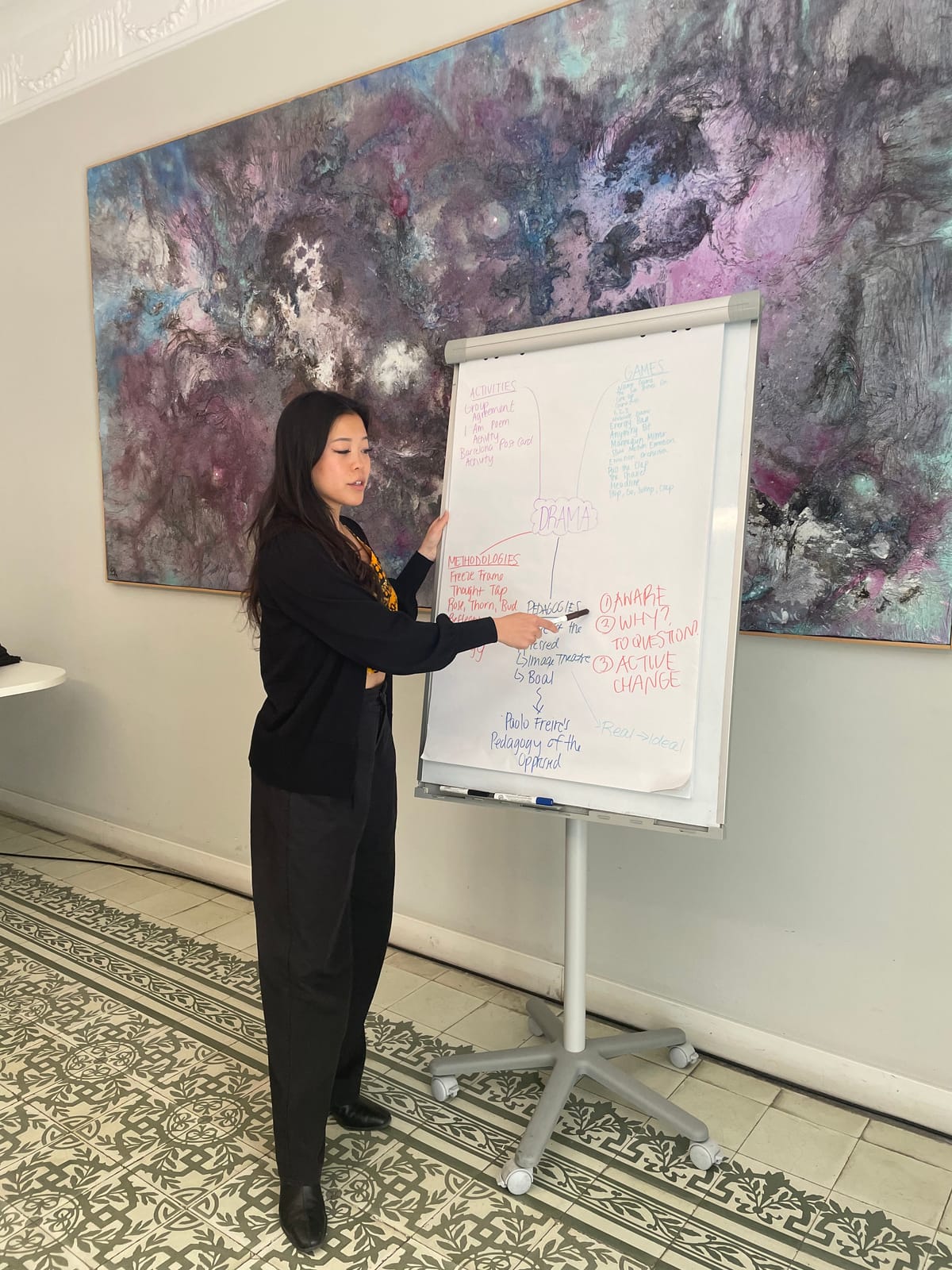
WHAT THE RESEARCH SAYS
57 studies
Drama had a large positive effect on learning (effect size 1.16) and a positive effect on attitudes to learning (0.68).
80 studies
Drama showed positive effects in 6 of 7 language areas, including reading, writing and spoken language.
27 studies
Positive effects on creativity (1.12), critical thinking (0.91), communication and collaboration, across 2,239 learners.
Kind words
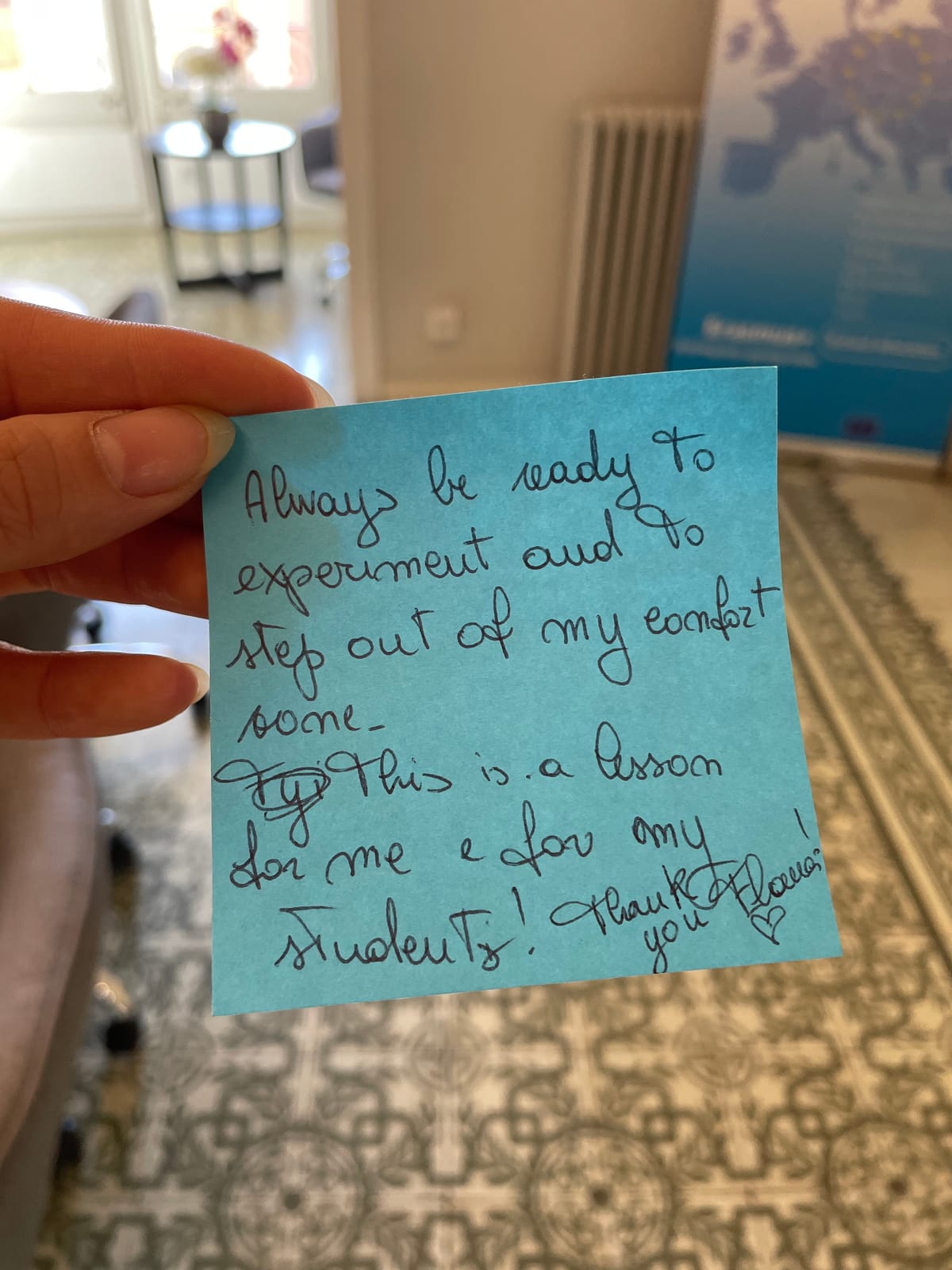
The learning experience... was very positive. I feel like I've improved my skills thanks to our excellent instructor, Elana Shyong. From the very beginning, she was able to create a welcoming environment where we could express ourselves fully and learn while having fun!
Elana was an excellent facilitator – the workshop had clear directives and outcomes and was thoughtfully planned out to achieve these goals. I thought it was a very professional workshop experience... I enjoyed all the moments and walked away feeling connected to the... community and enjoyed meeting everyone. It would be great to have you facilitate workshops again in the future!
I really liked pretty much everything about this workshop. I think Elana did a really good job organizing each session as well as explaining each activity clearly. What I found most useful was the structure of the activities. I'm not the most creative person on my own so I liked that we weren't just told what to do, but instead given formats to follow which made it easier for me to get started and then become creative.
Learning outcomes
Practical skills you can use with your very next group.
Design an interactive workshop from beginning to end.
Manage challenging group dynamics with confidence.
Encourage quieter participants to contribute.
Use creative exercises to explore complex subjects.
Lead more engaging discussions and group activities.
PODCAST
Listen to my conversation on the Life on Fifth podcast about facilitation and self-expression.
Want this for your school? I can deliver either training for your staff, as a one-off or an ongoing programme.
Tell me about your groupPRICING
Every group is different, so rather than squeeze you into a fixed package, I'd rather understand what you need and quote for that. Here's what shapes it:
Time together. From a short session to several days.
Group size. How many people will be in the room.
Tailoring. How much I adapt the content to your context, goals and people.
Online or in person. Online is often the simplest place to start.
Travel. Only if I'm coming to you, and always agreed up front.
Working with a set budget? Tell me what you have in mind and I'll suggest options that fit.
Free guide
Get my free guide to Think–Pair–Share: a simple method that gets everyone contributing, not just the quickest or loudest voices. Step-by-step timings, words to say, variations and a one-page checklist. You'll also get my occasional emails with practical activities and facilitation tips.
No. No acting, and everyone takes part in their own way. You'll learn simple drama techniques you can use in any workshop, class or meeting.
Facilitation Foundations is for people who lead groups and want core facilitation skills. Drama for Facilitators is for people who want to bring drama-based techniques into their work. You can also combine both.
From a 2.5-hour workshop to a 3-day intensive, or as a longer programme across the year.
Both. Trainings run online or in person, for individuals or for your whole team.
Yes. Individuals can join open trainings, and I also deliver both trainings for staff teams and organisations.
Tell me a little about who you work with and what you'd like to develop, and we'll find the right starting point.
From €250 for an online training · What shapes the price